
The “Polf Night” Boom: How Norway’s Golf + Poker Mashup Could Transform U.S. Golf Simulators
Quick Answer: “Polf Night” is an emerging Norwegian format that fuses simulator golf with live poker, where players earn poker chips through on-course performance and then sit down for a Texas Hold’em-style showdown. It keeps weaker golfers engaged, creates a second path to win, and turns a simple league night into a multi-hour social experience. For American golf simulator operators, adapting Polf Night could unlock new midweek revenue, higher bar tabs, and a differentiated brand experience without requiring expensive new technology.
Jump to the U.S. launch playbook →
- What Is “Polf Night” and Where Did It Come From?
- Inside Norway’s Polf Boom
- Why Golfers Love It: The Psychology Behind Polf
- How U.S. Sim Centers Can Launch Polf Night
- Sample Rules & Formats for American Players
- Legal, Operational, and Culture Checks
- FAQ: Common Questions About Polf Night
- Citations
Disclaimer: This article is for informational purposes only. It does not constitute professional, financial, or legal advice. Gambling and gaming laws vary by state and municipality. Readers should consult qualified legal, financial, and compliance professionals before implementing any Polf-style events or promotions.
What Is “Polf Night” and Where Did It Come From?
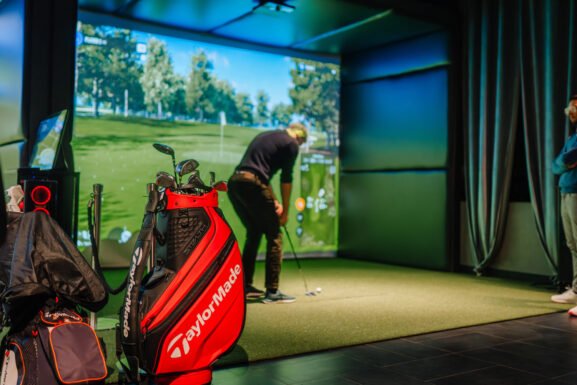
In Norway, a new kind of simulator event has begun to surface in operator communities and social feeds: “Polf Night,” a portmanteau of poker and golf. The core idea is simple but powerful. Players first compete in a simulator golf round, earning or losing poker chips based on their performance. Then, with whatever chip stack they’ve built, they pivot straight into a live poker tournament to decide the final winners. The night becomes half golf, half card game, and fully social.
The format first gained wider notice in English-speaking circles when a golf-simulator business owner asked whether others were “seeing a boom in ‘Polf’ (simgolf + poker)” on a U.S.-based industry forum dedicated to commercial simulator operations. That post describes local Norwegian venues running structured Polf events and reporting strong engagement and repeat attendance from golfers who might otherwise skip traditional stroke-play leagues [web:143].
Inside Norway’s Polf Boom
Most details about Polf come from operator anecdotes, social clips, and posts from European indoor-golf platforms rather than a formal rulebook. A recurring pattern, though, is that Norwegian sim centers are using Polf to turn regular league nights into full-evening experiences. Owners describe players booking bays for nine or 18 simulator holes, staying on for drinks, and then migrating to a central poker table or bar area where chip stacks determine starting positions for a Texas Hold’em-style tournament [web:143].
A key enabler is the software layer many Scandinavian facilities rely on to run leagues, track stats, and manage events. One prominent indoor-golf platform, marketed heavily in Norway, teases hybrid experiences where scoring and side games are managed centrally through its league/event tools, allowing operators to experiment with new formats like Polf without coding their own systems [web:148][web:150]. That infrastructure makes it easier to track shot outcomes, convert them into chips, and publish Polf leaderboards that bring players back week after week.
Why Golfers Love It: The Psychology Behind Polf
At its heart, Polf solves two chronic problems for simulator businesses: uneven skill levels and midweek energy drop-off. Traditional sim leagues tend to favor the same low-handicap players, while higher-handicap golfers quickly realize they have almost no chance to win a pure stroke-play format. When their scores balloon, so does the temptation not to return next season.
A Polf structure reframes the night around two games instead of one. The first phase—the golf—still rewards good ball striking with extra chips or bonus points. But the second phase—the poker—grants weaker golfers a second path to victory. A high-handicap player who had a rough scoring night can still win the whole event with smart, patient decision-making at the table. That dual-path structure keeps everyone emotionally invested until the final card is dealt, not the final putt dropped [web:143].
There is also a social dynamic at play. Golf, even indoors, is primarily a sequence of individual swings. Poker, by contrast, is fundamentally interpersonal. The shift from hitting bays to a shared felt table encourages eye contact, table talk, and group storytelling that deepen relationships between members. For Norwegian operators, Polf turns a transactional “practice session” into a weekly ritual, with more food, more drinks, and more reasons to bring friends along [web:143][web:148].
How U.S. Sim Centers Can Launch Polf Night
The most important takeaway for U.S. owners and managers: you do not need a custom software build to pilot Polf. A basic poker set, a clear rules sheet, and disciplined staff are enough to test the concept and refine it over time.
From a business standpoint, Polf Night fits best into slower midweek slots, where filling bays and bar seats is often a challenge. A typical structure might look like this:
- Weeknight timing: Tuesday or Wednesday, 6:30–9:30 p.m.
- Format: 9 holes of simulator golf followed by a 60–90 minute poker tournament.
- Pricing: Fixed “Polf Night” entry that bundles bay time, event management, and a prize pool or store-credit payout.
- Capacity: 16–32 players across several bays feeding into one central final table.
This structure monetizes both activities: bay rentals (or bundled entry fees) for the golf phase and strong food-and-beverage sales during the poker phase. Because players are seated and not swinging, operators in similar hybrid formats often report higher drink orders during game-table segments than during active play segments [web:141][web:145].
Sample Rules & Formats for American Players
Polf is still young enough that there is no single global standard, which gives American operators room to adapt the concept to their clientele and regulatory environment. Below are two illustrative formats drawn from Norwegian-style descriptions, existing “poker golf” side games, and popular poker-night structures [web:141][web:145].
Format 1: Classic Two-Phase Polf Night
In the classic format, the evening is explicitly split into two parts: “The Grind” (golf) and “The Showdown” (poker).
Phase 1 – Golf (Chip Earning)
- Players are grouped into bays of four and play 9 simulator holes on a predetermined course.
- Each player starts with a base chip stack for poker (for example, 2,000 chips).
- Performance on each hole modifies that stack according to a simple schedule, such as:
- Birdie: +500 chips
- Par: +200 chips
- Bogey: 0 change
- Double bogey or worse: −200 chips
- Closest-to-the-pin or long-drive contest wins: +1,000 chip bonus
- Scores and corresponding chip changes are recorded by a designated staff member or a “chip captain” in each bay.
Phase 2 – Poker (Stack Conversion)
- After golf, players move to a central seating area or a designated “poker lounge.”
- Each player receives a physical chip stack that mirrors their earned total from the golf phase.
- The group plays a timed No-Limit Texas Hold’em tournament, with blinds increasing every 10–15 minutes.
- Prizes are awarded based on finish position (for example, top three) using cash, store credit, or merchandise, depending on legal guidance in your state.
Format 2: “Vegas Scramble” Hybrid
For more casual groups—corporate outings, bachelor parties, or local social leagues—a “Vegas Scramble” version keeps poker interwoven with golf rather than split into phases.
- Teams of four play a scramble on the simulator.
- After every hole, each team designates one player to sit for a single hand of quick poker against representatives of the other teams.
- The winning team in that hand earns a stroke bonus (for example, subtract one stroke from that hole’s team score).
- This continues for 9 holes, with short poker hands punctuating the round instead of one long tournament at the end.
This variant maintains a light, party-like tempo and is easier to fit into a two-hour booking window, making it attractive for private rentals that may not want a full-blown card-tournament commitment [web:141][web:145].
Legal, Operational, and Culture Checks
Before a U.S. venue leans fully into Polf, three checkpoints matter: law, logistics, and culture. On the legal front, many states draw a line between house-banked gambling (where the business takes a rake or percentage) and social or promotional poker where all entry fees go back to players as prizes or non-cash credits. Even where “bar poker” is common, there may be requirements about registration, prize structures, and how marketing language is framed. Operators should work with local counsel or compliance consultants to design a structure that fits their jurisdiction [web:141].
Operationally, Polf requires staff who understand both sides of the equation. Someone must be able to run a clean poker tournament—managing blinds, rules disputes, and chip counts—while others keep simulator play on schedule and food-and-beverage service humming. Training a small “event team” and starting with pilot nights can reveal pinch points before Polf is rolled out more broadly.
Finally, culture fit is key. Some markets will embrace the poker angle immediately; others may respond better to lower-stakes, “chips-for-prizes” or “points-for-merch” approaches instead of overt cash competition. Early feedback from a core group of regulars will help dial in the right tone and stakes level for each community [web:143][web:145].
FAQ: Common Questions About Polf Night
Do I need special software to run Polf? No. Norwegian operators often use existing league/event platforms to help with tracking, but U.S. venues can start with simple spreadsheets and a physical chip set. Over time, you can integrate scoring into whatever simulator or league tools you already use [web:143][web:148].
Is Polf only for serious golfers? Not at all. In many ways, it is designed for the opposite. Because poker can overturn golf results, higher-handicap players feel less like they are “donating” entry fees to the best ball strikers and more like they have a real shot at winning something by outplaying others at the table [web:143].
How long should a full Polf Night run? For commercial operations, a 2.5–3 hour window works well: about 60–75 minutes for 9 holes of sim golf, then 60–90 minutes of structured poker. That pacing matches common weeknight attention spans and leaves room for pre- and post-event bar sales.
What if some guests don’t know how to play poker? Many venues in other hybrid formats solve this with a short tutorial before the tournament, simplified rules (for example, no rebuy, no complicated side pots), or by running a “learn-to-play” table alongside the main event, where new players can participate with smaller stakes [web:141].
Can Polf work with other games, not just Texas Hold’em? Yes. Some concepts in simulator communities mirror “poker golf” or “chip games” where performance on each hole earns or loses chips but never transitions to full card play. Others experiment with shorter poker variants or even digital card apps on tablets at each bay [web:141][web:145]. The Polf framework is flexible enough to accommodate local tastes.
Citations
- Reddit – r/golfsimulatorbusiness: “Anyone else seeing a boom in ‘Polf’ (simgolf + poker) …” [web:143]
- Instagram – Alba App: “The only system built for indoor golf …” (indoor golf event tools context) [web:148]
- Facebook – Alba App (indoor golf platform and event formats) [web:150]
- Vegas Golf The Game – “How to Play Golf Betting Games with Chips” (poker-style golf chip mechanics) [web:141]
- Great Games for Golfers – “Ways To Play Poker Golf” (poker-based golf formats and rules) [web:145]